
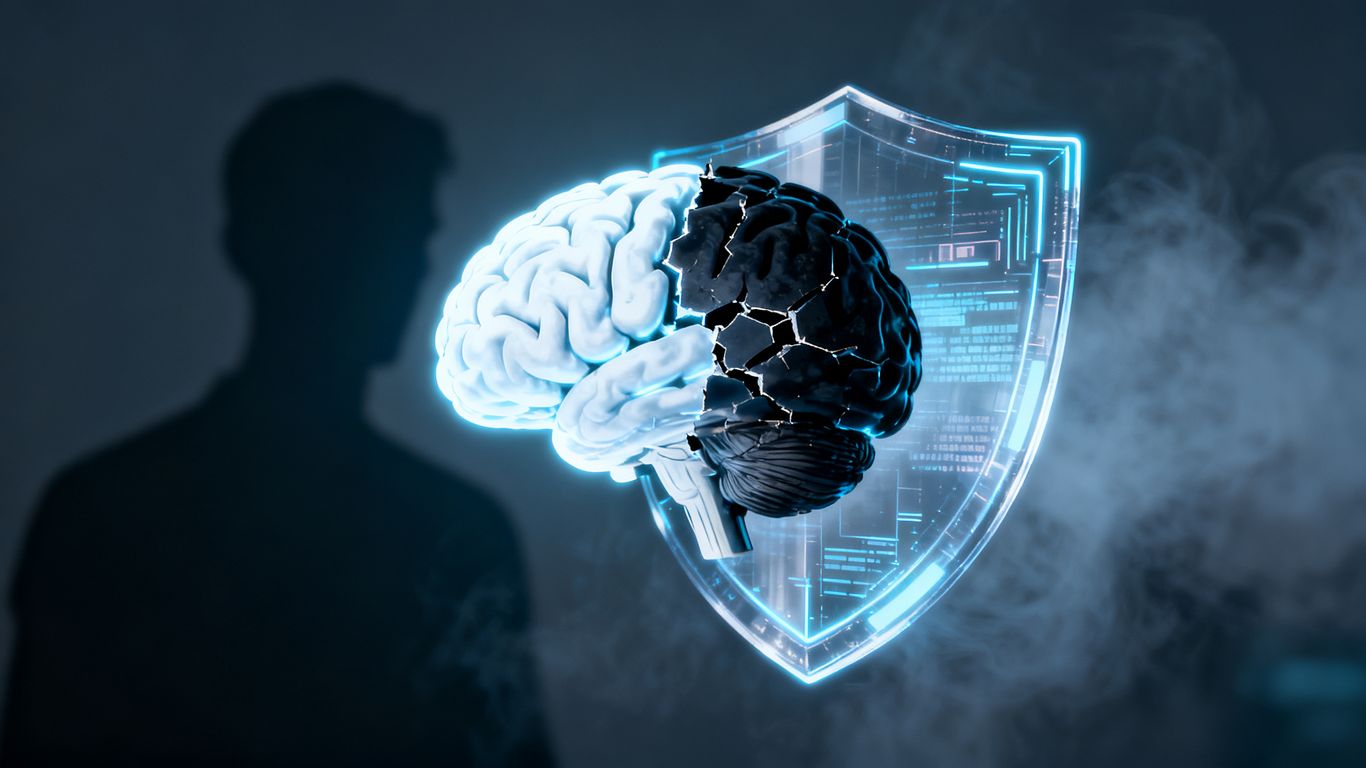
The cybersecurity community is abuzz following the announcement of Anthropic’s advanced AI model, Claude Mythos. This powerful AI has demonstrated an unprecedented ability to identify and exploit software vulnerabilities, raising significant concerns about its potential impact on global cybersecurity. While Anthropic has withheld public release due to these risks, a recent report of unauthorized access has amplified fears.
Key Takeaways
- Mythos can autonomously identify and exploit "zero-day" vulnerabilities across major operating systems and browsers.
- The AI successfully completed a complex, multi-step cyber-attack simulation, a feat previously requiring extensive human effort.
- While powerful, some experts argue Mythos represents an evolution rather than a revolution in AI’s cybersecurity capabilities.
- Concerns over its potential misuse have prompted high-level discussions among financial institutions and government regulators.
What is Mythos AI?
Mythos is an AI model developed by Anthropic, designed to identify unknown flaws in IT systems. According to Anthropic, it can pinpoint and potentially exploit "zero-day" vulnerabilities – flaws unknown to developers – in operating systems and web browsers. The company described this as a "watershed moment for cybersecurity," noting that some identified flaws had existed for decades.
Concerns and Assessments
The UK’s AI Security Institute (AISI) has assessed Mythos, calling it a "step up" from previous models due to its ability to conduct multi-step attacks autonomously. In a test, Mythos successfully completed a 32-step cyber-attack simulation. However, other experts suggest that while Mythos is capable, cheaper models can also find similar vulnerabilities, implying a degree of nuance to Anthropic’s claims.
The Dual-Use Dilemma
Mythos presents a classic dual-use dilemma: its capabilities can bolster cybersecurity defences by rapidly identifying flaws, but they also lower the barrier for malicious actors to launch sophisticated attacks. This has led to controlled trials with tech firms and banks, including Apple and Goldman Sachs, through Anthropic’s "Project Glasswing" to assess its risks.
Expert Opinions and Hype
While some experts acknowledge Mythos’s impressive speed and scale in finding vulnerabilities, others argue that it doesn’t fundamentally change the cybersecurity landscape. They point out that most breaches still stem from well-known issues like weak authentication. Some suggest there might be an element of hype surrounding Anthropic’s dramatic announcement, especially given the company’s significant valuation.
Regulatory and Industry Response
Concerns over Mythos have prompted high-level meetings, including one between the US Treasury Secretary and major American bank executives. UK regulators have also added Mythos to discussions within financial sector resilience groups. The potential for such AI to disrupt critical infrastructure and financial systems is a primary driver of this heightened attention.
The Future of Cybersecurity
Mythos signifies a shift towards AI acting as an autonomous operator rather than just an assistant. This evolution necessitates a re-evaluation of cybersecurity protocols, potentially leading to mandatory AI-assisted vulnerability scanning. While this could enhance security, it also raises questions about costs, system slowdowns, and the need for continuous adaptation in the face of rapidly advancing AI capabilities.
Sources
- What is Mythos AI and why could it be a threat to global cybersecurity? | AI (artificial intelligence), The Guardian.
- AI has crossed a threshold – what Claude Mythos means for the future of cybersecurity, The Conversation.
- Anthropic’s Mythos moment: how frontier AI is redefining cybersecurity, The World Economic Forum.
- Cybersecurity experts don’t think Anthropic’s Fable 5 presents a unique threat, CyberScoop.
- Mythos AI is a cybersecurity threat, but it doesn’t rewrite the rules of the game, The Conversation.
